In Middlemarch, late 1959, a heavily pregnant woman reaches for a box of Christmas chocolates gifted to her by her husband’s boss. She feels a sharp pain. Something isn’t right. Things escalate. Bleeding, scared and without a vehicle, a mechanic from down the street races the woman and her husband to Queen Mary Hospital in Dunedin. She had pinched the baby’s placenta.

Here she would stay uncomfortable and frustrated for two weeks. She is discharged on Christmas day, but on doctor’s orders she isn’t allowed to return to Middlemarch. The only option is to bunk in with her parents-in-laws until her own parents return from holiday in a short while.
She would stay there until the 8th of February, 1960- the day my mother was born.
The woman and her husband would call their daughter Donna, and later the couple would go home to Middlemarch. They return to their son who is five years old, and to the old bootmakers shop that they called home on the main street. My grandfather had taken a job in Middlemarch and moved there from his hometown of Port Chalmers, right before he and my grandmother married. They’d had a small wedding with just a few guests and of course my grandma moved out of her family home at Hugh Street, Sawyers Bay- the home she herself was born in- to be with him.
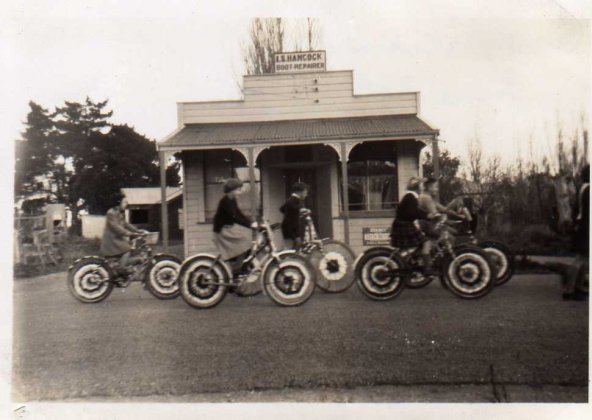
The bootmakers, she recalls, had a house tacked-on to the back of the shop with a tiny kitchen, a tiny bathroom, two bedrooms and the original hitching rail still out the front.
She doesn’t remember if she had a ‘rush of mothers love’ (in her defence, it has been sixty years) but recalls that her daughter was a normal baby and that she was happy she now had each a boy and a girl. They would spend three more years in Middlemarch before moving to Mosgiel around 1963- still no car- and rented a place up the street from the section where my grandfather, a carpenter, would soon build for them a house.

It took a year to build the new house on weekends and evenings and initially it had an outside toilet and no neighbours at all to the West. They were the last house on Factory Road and had a great expanse of vegetable and flower gardens on their huge section. Although I don’t know how big the section is, it would be much larger than a quarter-acre and the picture my Grandma paints of it back then really is the stuff of many a millennials dream these days.

“What type of daughter was my mother?” I ask. “Untidy.” she replies, very short in tone. One day when my mum was at Primary School, she threatened her that if she didn’t clean up her room, she was going to throw all her clothes out of the window. And she did. “Did she learn her lesson?” I asked. “No, not really.” Grandma chuckles, still looking a little resigned over the matter.
There weren’t many family holidays- they were still carless all these years later- but my mother and her brother did spend a lot of time at their maternal grandparents’ house on Hugh Street. The one in Sawyers Bay I mentioned earlier. Hugh Street is a significant street in my family history, but we’ll get to that later. “Were there some photos from a holiday at Warrington one time?” Grandma ponders to herself, “I’m not sure,” she answers herself.
There were. There are. And these will be amongst the first photos I will ever see of my mother as a young girl.
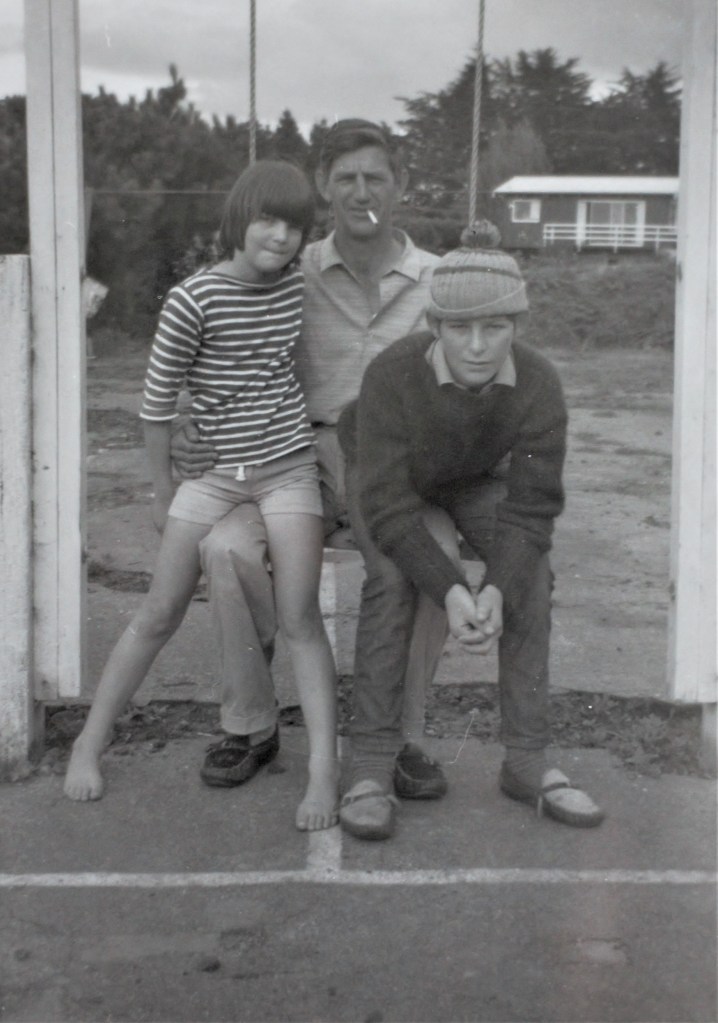
When staying with her grandparents on Hugh Street, my mother would often have to be watched by the boy across the street. Her Grandma Barclay would be busy drinking cups of tea and gossiping with the boy’s grandmother. The two grandmothers were great friends and did a lot of talking about whatever it is that grandmothers talk about. The grandma across the street’s husband had built their house (stay with me here), and they had seven grown children. Veggie growers and market gardeners, they were. There was a huge fernery that enveloped half of the property, planted with beautiful native trees and shrubs dug from the surrounding hills, carried and returned on foot by the man of the house himself and his sons. The husband owned several sections on Hugh Street, and one of their daughters had been gifted a neighbouring section as a wedding present, where her husband too built a house.
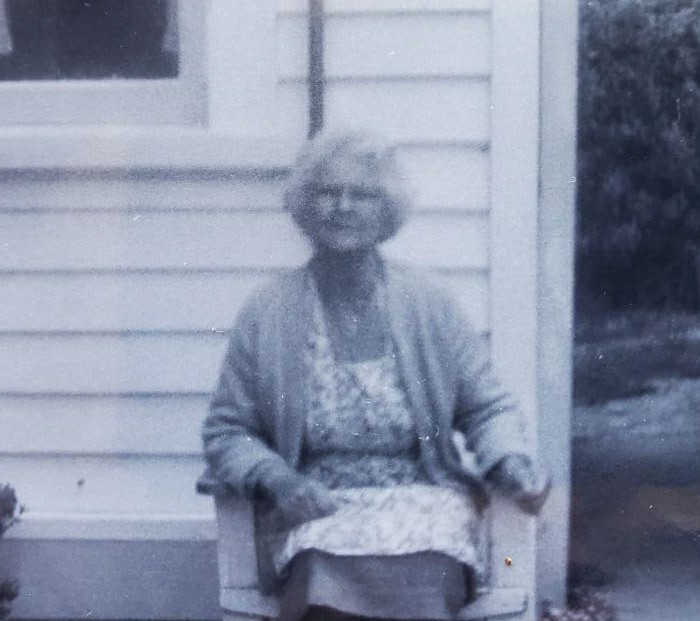
Another one of their seven children lived not far up the road on Brick Hill- that’s where the boy, their grandson, lived. The boy with the job of mowing his grandparent’s lawns and supervising babies during high tea and gossip time. He found preoccupying the young girl quite boring. He would much rather be out fishing or tinkering or anything but babysitting a child four years younger than him.
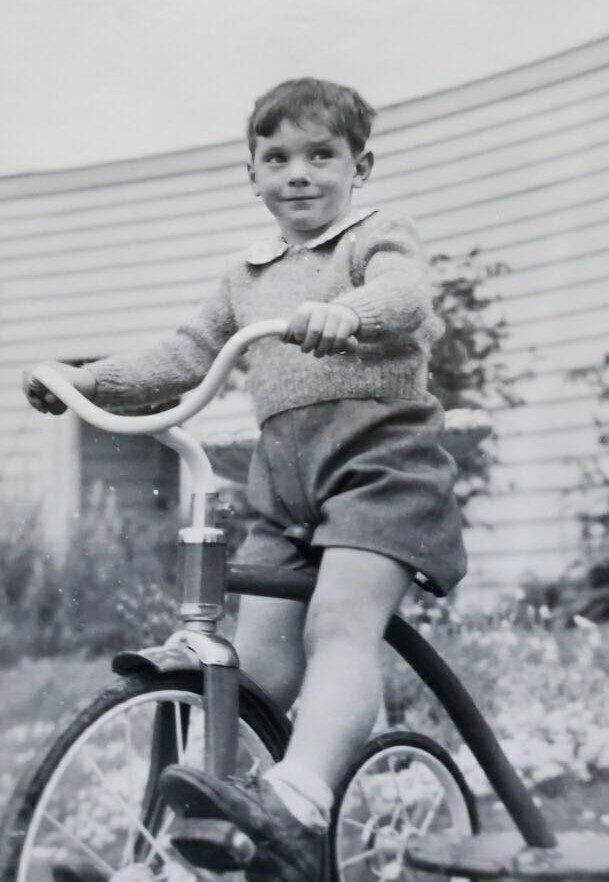
So here we are in the 1960s. We have a street in a small, insular settlement on the edge of the Port of Otago. We have two grandmothers- one is the girl’s grandmother and one is the boy’s grandmother. They are Grandma Barclay at number 18 Hugh Street, and Gabba Pratley at number 15. I know the boy called his grandmother Gabba, because he told me so himself. Many a time. I know it to be true because…
The boy is my father.
–
 Finding Donna / The Rabbit Hole
Oh Jen that’s an awesome story well done to you x Pete and I are so interested and of course it’s all so familiar the street names people etc.
LikeLike
Beautifully written Jen. Brings back so many childhood memories for me. I also know this to be true too because the boy is my younger brother. Looking forward to your next instalment of finding Donna.❤️
LikeLike
Beautifully written Jen. Brings back so many childhood memories for me. I also know this to true because the boy is my younger brother. Looking forward to your next instalment of finding Donna
LikeLike