Of the school friends of my mother who I’ve met, some recall St Mary’s School as being a fine school with strict, although kind Sisters. Others definitely do not feel this way. Mum spent all of her primary school years during the 1960’s at St Mary’s Catholic School. She had her Confirmation and First Communion there. It seems like it just was what it was, and looking at a photo of all of the children lined up having just received their First Communion, priests either side, they do all look slightly perplexed in a way, like perhaps they don’t really know what’s just happened.
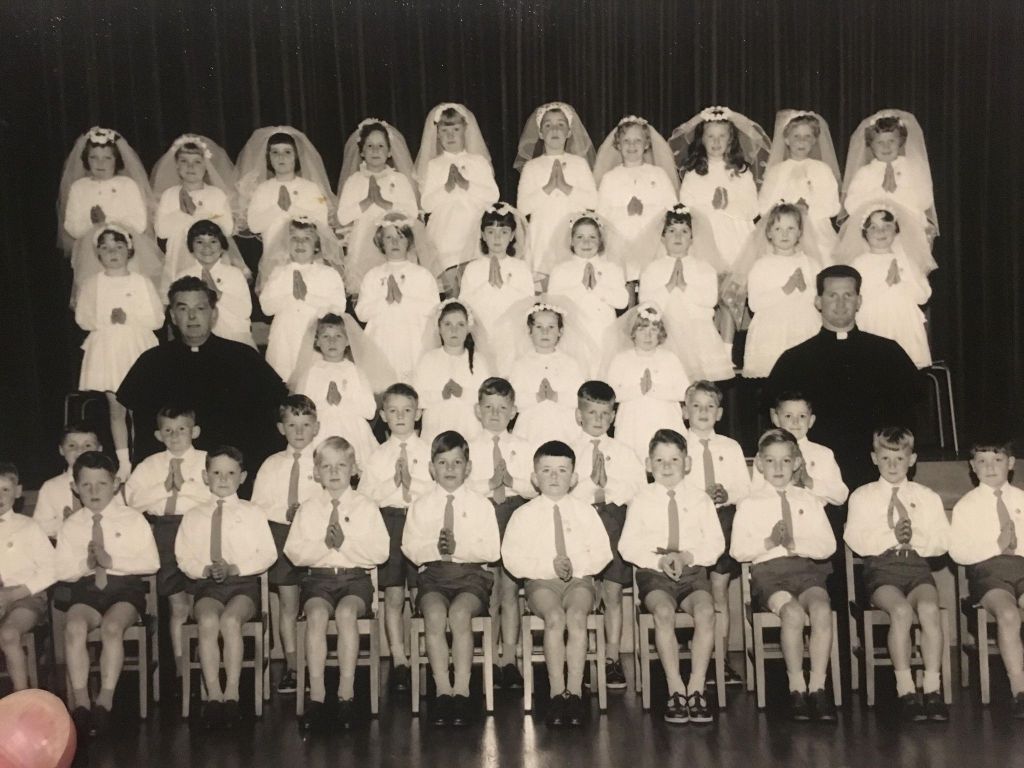
On talking to a primary school friend of mums, T, she made it clear she is one of the pupils that doesn’t remember St Mary’s particularly fondly. Sometimes it wasn’t a nice place to be. She made me aware of an ODT article about a former student of ’66 who reported a case of a severe beating he had received – 54-plus lashes while the Sister doing the beating made his classmates count them out loud. He was 10 years old when this happened. The man was now terminally ill and wanted to get his story out there and have it added to the recent Inquiry into state and religious-based care. The man passed-away not long after the ODT article was written. T recalled a time at St Mary’s where the children were having their lunch in the school hall on a rainy day. One of the nuns found a half-eaten sandwich and was convinced it belonged to T’s brother. The brother thoroughly denied it was his, but regardless of whether it was his or not, because he didn’t own up to it, all the boys in the hall were lined up on the stage, ordered to put their hands out and strapped. By a Sister. A woman of God. Using her leathery weapon of choice, which she herself had named ‘Jimmy Stinger’.
T also spoke of an occasion when her five year old sister had drawn a picture in class. Only having had one crayon to use, she had drawn it all in black and thought she’d done a wonderful job. “The nun saw it, picked her up by the ear, dragged her to the front of the class and told everyone she was going to hell.”
P, another school friend of my mothers, remembers often being kept after school by one of the nuns. Her job was to polish the chalices in the chapel- a simple task it seems, but it made her feel uneasy. She doesn’t know why the nun always singled her out to do it, she just knows the nun seemed to need someone to be there with her while she worked. I asked her if she ‘knew’ Jimmy Stinger. “I knew the strap very well.” She mused. “The nun that made me clean the chalices had a very wide strap. I remember that, because she made me put my hand so that it was flat atop the table. So that I had no give.” Alternatively, another nun, Sister MD had a very thin strap and would make the children stand in front of the class to be walloped. The strappings happen often, P remembers. “Usually, it was for stuff you didn’t even realise you’d done wrong. There was no explanation. One day I passed a note in class… and I got six of the best.”

I myself went to Catholic schools, and although people have vastly different experiences in religious institutions, I can understand some of the internal turmoil one might face, because I have faced it myself. But not having lived in a time when physically beating children at school was perfectly normal, I won’t ever pretend to know that. Especially when that physical beating is delivered by someone who you’re told loves you, and whom God loves, and you have no idea why they’re doing it.
The former students of St. Mary’s remember my mother as being quiet during those years- experience dictates both perception and self-preservation, I suppose. When you’re raised in a strict household and go to a strict school, I’d hazard a guess one would quickly learn when to raise your voice and when not to. “She was a quiet girl. Very quietly spoken.” P says.
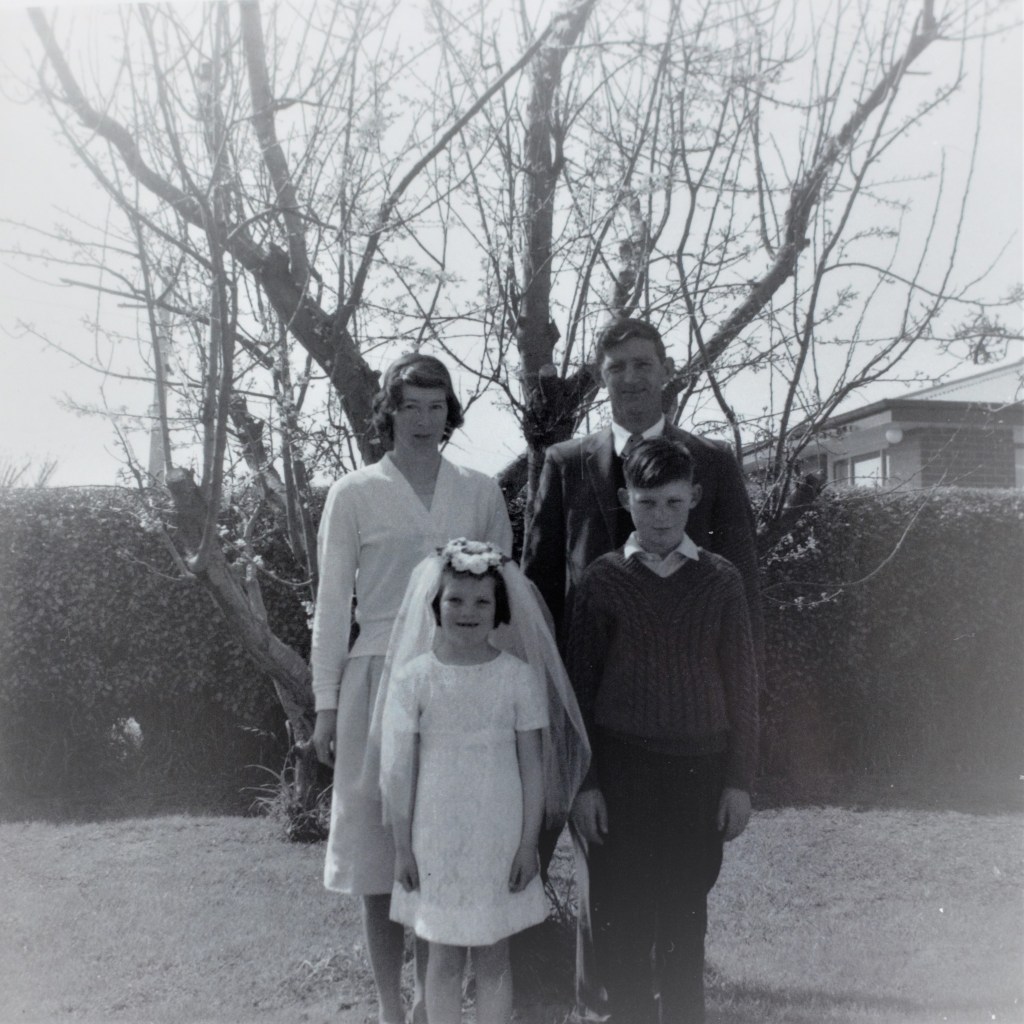
“It was rammed down their throats a bit,” said Grandma. “It was when she got a bit older, maybe standard six that your mum started rebelling… We had that pedophile priest there too, but that was all hush-hush, you know. He was sent off to the Solomon Islands. I don’t think she got on the wrong side of them at all. They certainly weren’t afraid to wrap them across the knuckles with a stick.” This all made me wonder if something happened to my mother. Something particularly awful. Maybe that’s why she was so quiet, or perhaps she just saw what happened to others and learned very quickly how to get by unscathed. I don’t know if my mother was ever strapped or caned at St. Mary’s, and I probably never will.
If my mother was as fierce and strong-willed and as persevering of her morals in her adult life as people report her to have been, then I suppose rebellion against the church as she got older makes some sense. “She still believed in God,” my father says, one hand perched on his forehead and a cigarette in the other as he tries to explain. “She just didn’t like anything the Catholic Church- the institution- stood for. She still considered herself a Christian and she did get on well with the two Sisters here,” he refers to the two local nuns of my childhood town where my father still lives.
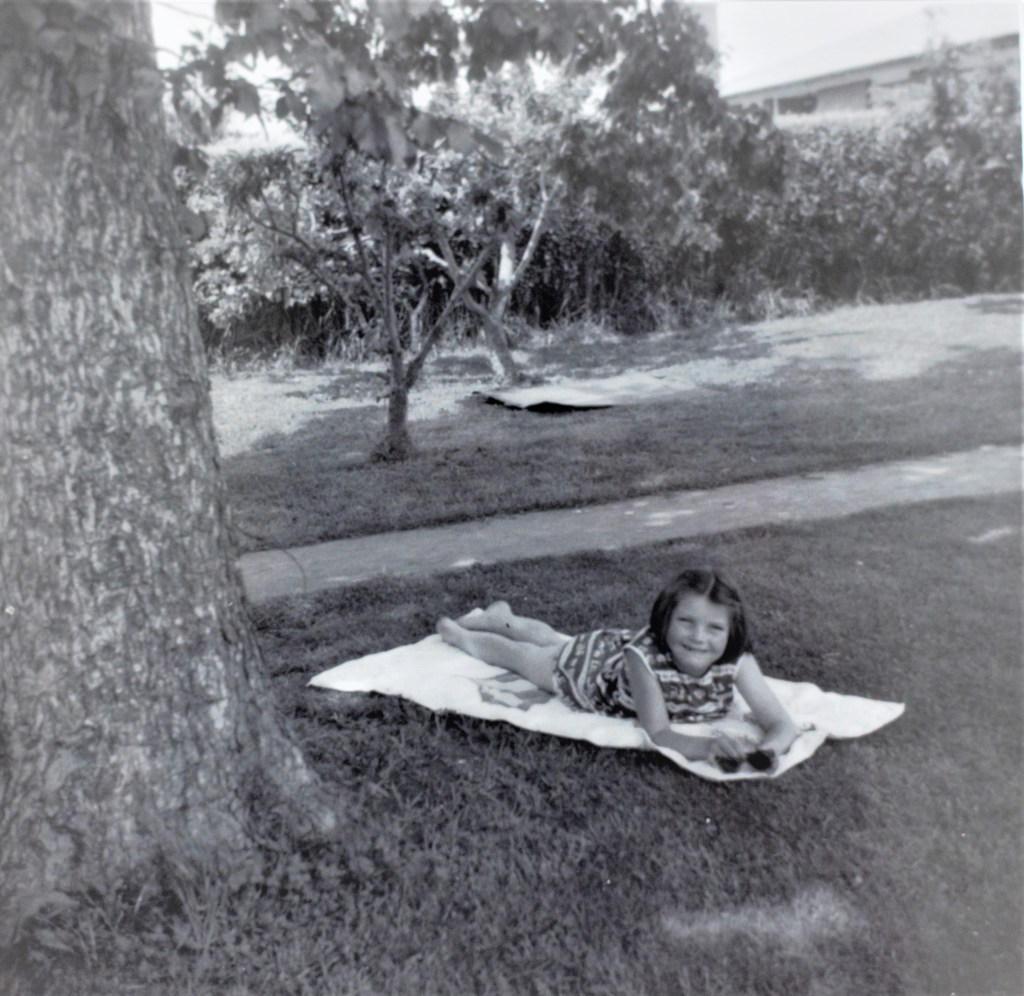
A picture of a moral and deeply personal debate emerges. When I was a teenager attending a Catholic boarding school, I remember questioning the faith I’d tried to create for myself, too. That I have also had spiritual dilemmas with secular and humanised outcomes without knowing my mother or ever having had her influence on my life, makes me feel somehow closer to her. The argument of ‘nature versus nurture’ has reared its head repeatedly to me throughout my life and so it continues.
Most of my mother’s then-friends whom I’ve spoken to remember mostly only being able to play outside at the family home on Factory Road. Running, imagining, doing hair and playing with dolls. “She had two beautiful big dolls that she was happy to share with me,” P remembers. “Together we got lost in a world of fantasy… Nothing else mattered.” When Grandma Barclay died (the grandma from 17 Hugh Street), my mother was nine years old, and P was allowed inside the house to visit for the very first time. “She was lying in bed crying… she had been crying all night and asked me to touch her pillow that was saturated through with her tears. I sat with her and listened.” I’m glad to know that mum had P at this time, because I’m not sure who else she would have had. It wasn’t too many years later that both mum and P started at The Taieri High School, and they still talked, but they grew apart. From there, my mother made new friendships, but the majority of her life thereafter for many years would be dominated by one thing:
Band.
 Finding Donna / The Rabbit Hole
Oh Jenny. I never knew that Donna had such a difficult childhood. She grew up to be an amazing woman. You must be so proud of her. And you are so much like her in so many ways, I’m sure she is watching over you and guiding you on your journey. ❤️
LikeLike